
A new open-access monograph by IMH Honorary Fellow Dr Nicola Simonetti, previously a Bridging Fellow in the Measurement & Narrative Practices Labs, sheds light on the intersections between neurodiversity, literature, and the growing field of Contemporary Studies.
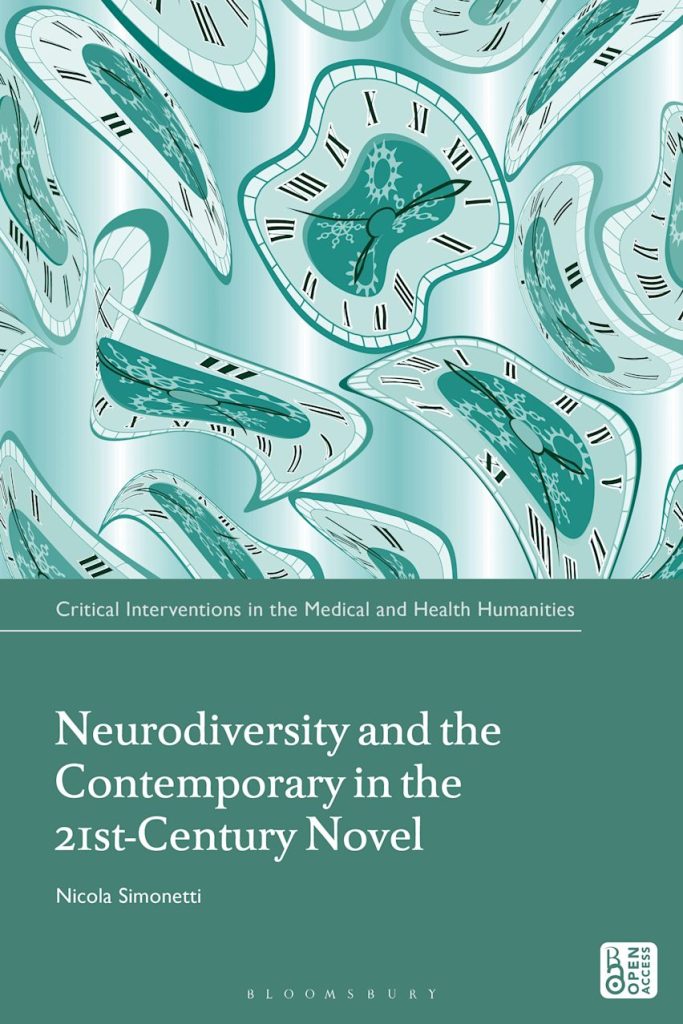
Since the new millennium, there has been a significant shift in how neurocognitive differences are recognized, with neurodiversity emerging as a key term to address neurocognitive variation within human society. Through the 2000s, approaches to neurodiversity have diversified, not only finding theoretical alignment with evolving themes in Critical Disability Studies and the wider Medical Humanities, but also establishing connections with disciplines not traditionally focused on health-related research. Drawing on these various alliances and striving to make new ones, Neurodiversity and the Contemporary argues for the benefits of bringing neurodiversity in conversation with theorizations of the contemporary. Just as neurodiversity has gained traction as a framework for understanding neurocognitive diversity, the contemporary has been used as the favoured term to explain the conditions and challenges of twenty-first-century society. Nevertheless, Critical Neurodiversity Studies scholarship has largely overlooked the many provocative concepts introduced by contemporary epistemologies while neurodiversity was being theorized.
Blending literary close reading and discourse analysis, Neurodiversity and the Contemporary turns to fiction for the strategic insights it can offer into the twenty-first-century transformation of ideas of neurodiversity and time. The bookforegrounds the impact of neuronovels in determining how its titular concepts unfold within the structures of the novelistic genre and the fictional discourse itself. In so doing, it recuperates a term once used derisorily to describe narratives where novelistic meaning is almost exclusively dictated by neurocognitive determinism, moving beyond this reductionist view to engage imaginaries of nonlinear time, explore processes of social exclusion and rigid socioeconomic structures of time, and serve as an essential problematization of current theories of literary composition in relation to neurodivergent experiences and processes.
Written in accessible prose, Neurodiversity and the Contemporary speaks to an interdisciplinary audience in Critical Neurodiversity Studies, Critical Disability Studies, the wider Medical Humanities, Contemporary Studies, and Comparative Literature.


